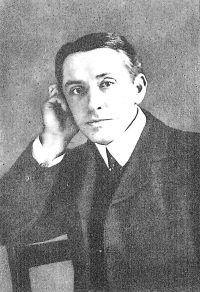
J. S. Fletcher

J. S. Fletcher

Summary

Portrait of J. S. Fletcher J. S. Fletcher,  Diamond Cut Diamond (1925)

“ Two or three old men, ancient gaffers of the town, sat on the steps of the market-cross; two or three children played about the church steps; half-a-dozen chickens scratched where grass grew among the cobblestones; from the meadows across the river came the voices of boys playing cricket. It was a peaceful scene and Benjamin Gosling was taking it in before retreating to his bar-parlor to refresh himself with a glass and a cigar. But as he was about to turn away into the old stone-paved hall of the inn, the one fly which his establishment boasted came over the bridge. ”
Source: Wikisource

Portrait of J. S. Fletcher J. S. Fletcher,  Diamond Cut Diamond (1925)

“ MARKET HARLING is one of those towns, more than half medieval in aspect and atmosphere, which are still to be discovered in certain corners of England. It lies on the southeast slope of a shelving hill, on the heights of which rises an ancient castle, grim and formidable as when it was built seven hundred years ago. The Marquis of Harling, when he happens to be at home in that castle, and looks from any of its hundreds of windows, can truthfully say that he is monarch of all he surveys. ”
Source: Wikisource

Portrait of J. S. Fletcher J. S. Fletcher,  Diamond Cut Diamond (1925)

“ His hand and his stamp are on everything and every man. The effigies in marble and alabaster of his ancestors crowd the thirteenth-century church; his escutcheon is emblazoned on the sign that swings before the picturesque old hostelry facing the church. It is a gaily-colored emblazonment, too, and catches your eye as soon as you cross the bridge, and it is only when you get close to it that you notice that there are words above and beneath the brightly hued quarterings—“The Marquis’s Arms, by Benjamin Gosling.” ”
Source: Wikisource

Get perspective with Kwize: daily news enlightened by great literature