Summary

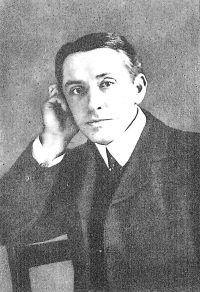
Portrait of J. S. Fletcher J. S. Fletcher Ravensdene Court — 2. Ravensdene Court (1922)

A path that led inland from the edge of the cliffs took me after a few minutes' walking to a rustic gate which was set in the boundary wall of a small park; within the wall rose a belt of trees, mostly oak and beech, their trunks obscured by a thick undergrowth. Passing through this, I came out on the park itself, at a point where, on a well-kept green, a girl, whom I immediately took to be the niece, recently released from the schoolroom, of whom Mr. Raven had spoken in his letter, was studying the lie of a golf ball.
Source: Wikisource

Portrait of J. S. Fletcher J. S. Fletcher Ravensdene Court — 2. Ravensdene Court (1922)

And presently I, too, went on my way, and rounding another corner of the cliff left the lonely inn behind me.
But as I went along, following the line of the headlands, I wondered a good deal about Salter Quick and the conversation at the Mariner's Joy. What was it that this hard-bitten, travel-worn man, one who had seen, evidently, much of wind and wave, was really after? I gave no credence to his story of the family relationship—it was not at all likely that a man would travel all the way from Devonshire to Northumberland to find the graves of his mother's ancestors.
Source: Wikisource

Portrait of J. S. Fletcher J. S. Fletcher Ravensdene Court — 2. Ravensdene Court (1922)

Altogether, the afternoon was drawing to its close when, rounding a bluff that had been in view before me for some time, I came in sight of what I felt sure to be Ravensdene Court, a grey-walled, stone-roofed Tudor mansion that stood at the head of a narrow valley or ravine—dene they call it in those parts, though a dene is really a tract of sand, while these breaks in the land are green and thickly treed—through which a narrow, rock-encumbered stream ran murmuring to the sea.
Source: Wikisource

Get perspective with Kwize: daily news enlightened by great literature