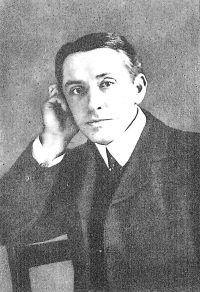
J. S. Fletcher

J. S. Fletcher

Summary

Portrait of J. S. Fletcher J. S. Fletcher The Root of All Evil

And, in unconsciousness or semi-consciousness, she lay in her bed for a long time, hovering between life and death. One season had merged into another before Jeckie came to herself. Farnish and his younger daughter were at her bedside when her eyes first opened with full intelligence, and for a moment she believed that the old days at Applecroft were back again, and that they were all together. But in the next she remembered and realised, and after one quick glance at Rushie she turned her face to the wall with a gesture that seemed to implore silence.
Source: Gutenberg

Portrait of J. S. Fletcher J. S. Fletcher The Root of All Evil

Farnish went out to the colliery proprietor, who sat in his smart dog-cart, meditatively surveying the scene on the other side of the road. There were no signs of activity now about the pit on which Jeckie had set such hopes; the surface buildings stood as ruinous as the explosions had left them; on the hillside the cottages intended for the miners were just as they were when all work had come to an end on them; over the whole surface of the Leys there was ruin and desolation. And Revis had just shaken his head and heaved a deep sigh when Farnish emerged from the cottage.
Source: Gutenberg

Portrait of J. S. Fletcher J. S. Fletcher The Root of All Evil

You know me, Miss Farnish?—Mrs. Albert Grice."
For once in her life Jeckie was taken aback. She stared at her visitor as if Lucilla had been one of the animals from the menagerie just then being shown at Sicaster, and the vivid colour which always distinguished her healthy cheeks deepened. In silence, and with a glance at Rushie, who was staring open-mouthed at Mrs. Albert, she left the cash desk and ushered the caller into the parlour.
"What do you want?" she demanded with asperity. "I'm busy!"
"You're always busy," said Lucilla. "Anybody can see that.
Source: Gutenberg

Get perspective with Kwize: daily news enlightened by great literature