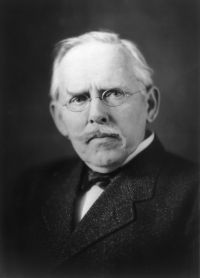
Jacob A. Riis

Jacob A. Riis

Summary

Portrait of Jacob A. Riis Jacob A. Riis The old town (1909)

When disaster did come, though it took the power of two empires to bring it about,—it was an immediate result of the war of conquest waged by Germany and Austria against Denmark that drew the boundary line and built custom-houses within sight of the factory windows,—it was accepted as a judgment any one could have foretold. But even that bold intruder had never been guilty of the impropriety of whistling. The drowsy clatter of mill-wheels where blossoming lilacs dipped over garden walls into the loitering stream was the only sound of industry that broke the profound peace.
Source: Gutenberg

Portrait of Jacob A. Riis Jacob A. Riis The old town (1909)

I see our little band trooping homeward, all desire to skip or play swallowed up in a vague dread of nameless disaster. I live over again the dark days when, in the hush of all other sounds and cares, we listened by night and by day to the boom of cannon coming nearer and nearer from the Eider, where the little Danish flock was matched in unequal combat against the armies of two mighty empires. Then the flight of broken and scattered regiments, hunted, travel-worn, and desperate, through the town. The bivouac in the Square, with shotted guns pointing southward over the causeway.
Source: Gutenberg

Portrait of Jacob A. Riis Jacob A. Riis The old town (1909)

Over the wildsome moor he had come, neither resting nor sleeping, his face set ever toward the sea, the one wild prayer in his heart that he might not be too late. But ride man ever so fast, death travels faster. As his horse’s hoofs struck fire from the stones in Grönnegade,16 with the castle beyond the pillared gate at its end, the Ribe church bells rang out the tidings of Dagmar’s death.
Source: Gutenberg

Get perspective with Kwize: daily news enlightened by great literature