Summary

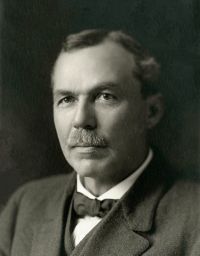
Portrait of Jacob Piatt Dunn Jacob Piatt Dunn The Word Hoosier; John Finley

I think—a noble philanthropic young Southern woman is reproached by her haughty father for teaching the poor children in the neighborhood—"a lot of hoosiers," he calls them. I have seen it in other books, too, but I can not recall them. In newspapers the word is common enough, in the sense I referred to.
It is scarcely possible that this widespread use of the word in this general sense could have resulted if the word had been coined to signify a native of Indiana, but it would have been natural enough, if the word were in common use as slang in the South, to apply it to the people of Indiana.
Source: Gutenberg

Portrait of Jacob Piatt Dunn Jacob Piatt Dunn The Word Hoosier; John Finley

These taunts produced fights in the market house and streets of Louisville. On one occasion a stout bully from Indiana was victor in a fist fight, and having heard Colonel Lehmanowsky lecture on the "Wars of Europe," who always gave martial prowess to the German Hussars in a fight, pronouncing hussars "hoosiers" the Indianian, when the Kentuckian cried "enough," jumped up and said: "I am a Hoosier," and hence the Indianians were called by that name. This was its true origin. I was in the State when it occured. [8]
Unfortunately, others are equally positive as to their "true origins."
Source: Gutenberg

Portrait of Jacob Piatt Dunn Jacob Piatt Dunn The Word Hoosier; John Finley

My remark was caught up by some bystander, and the word hussar construed to mean the men of the State of Indiana (from which I had just come) , and thus the word "Hoosier" came into existence. Such is the irony of fate! Learned men have labored long to introduce some favored word of the most approved classic derivation, and as a rule have failed. Here a chance word of mine, miscalled by an ignorant loafer, catches the popular fancy and passes into Literature.
Source: Gutenberg

Get perspective with Kwize: daily news enlightened by great literature