Summary

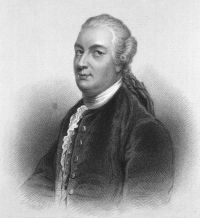
Portrait of James Bruce James Bruce Travels to Discover the Source of the Nile…

My ancestors were the kings of the country in which I was born, and to be ranked among the greatest and most glorious that ever bore the crown and title of King. This is the truth, and nothing but the truth. I may now, I hope, without offence, ask, To what does all this information tend?”
“To your safety,” said he, “and to your honour, as long as I command in Masuah;—to your certain death and destruction if you go among the Abyssinians; a people without faith, covetous, barbarous, and in continual war, of which nobody yet has been able to discover the reason.
Source: Gutenberg

Portrait of James Bruce James Bruce Travels to Discover the Source of the Nile…

The overflowing of these immense marshes carry first that discoloured water into Egypt, then follows, in Abyssinia, the overflowing of the great lake Tzana, through which the Nile passes, which, having been stagnated and without rain for six months, under a scorching sun, joins its putrid waters with the first. There are, moreover, very few rivers in Abyssinia that run after November, as they stand in prodigious pools below, in the country of the Shangalla, and afford drink for the elephant, and habitation and food for the hippopotamus.
Source: Gutenberg

Portrait of James Bruce James Bruce Travels to Discover the Source of the Nile…

At half past two o’clock in the afternoon we began to ascend the mountain, through a most rocky, uneven road, if it can deserve the name, not only from its incredible steepness, but from the large holes and gullies made by the torrents, and the huge monstrous fragments of rocks which, loosened by the water, had been tumbled down into our way. It was with great difficulty we could creep up, each man carrying his knapsack and arms; but it seemed beyond the possibility of human strength to carry our baggage and instruments. Our tent, indeed, suffered nothing by its falls
Source: Gutenberg

Get perspective with Kwize: daily news enlightened by great literature