Summary

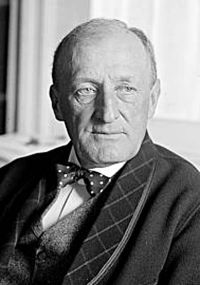
Portrait of James Clark McReynolds James Clark McReynolds Davis v. George B Newton Coal Company…

From the facts stated it appears, plainly enough, that one hundred and thirteen cars of coal cars of coal belonging to defendant in error were seized by the United States while upon the lines of carriers under their control and thereafter appropriated and used in the operation of such roads. The taking was for a public use. The incantation pronounced at the time is not of controlling importance; our primary concern is with the accomplishment.
Source: Wikisource

Portrait of James Clark McReynolds James Clark McReynolds Davis v. George B Newton Coal Company…

Also that seizure and use of the coal by the Director General rendered the United States liable for just compensation, measured by market value. And, further, that the Director General was not an innocent third person to whom property has been delivered by the sovereign for the public welfare, but an agency of the United States for operating the railroads, and, under the Transportation Act 1920, plaintiff in error might be sued upon claims arising therefrom.
Source: Wikisource

Portrait of James Clark McReynolds James Clark McReynolds Davis v. George B Newton Coal Company…

No disputed question of fact remains. In 1919 defendant in error, a Pennsylvania corporation, doing business at Philadelphia, contracted with producers for large quantities of bituminous coal, f. o. b. the mines, subject to the regulations of the United States Fuel Administration. During January and February, 1920, while thirty-three cars of coal consigned to the corporation under these contracts were moving over the Philadelphia & Reading Railway, the Director General of Railroads took possession of them and used the fuel for operating trains on that line.
Source: Wikisource

Get perspective with Kwize: daily news enlightened by great literature