Summary

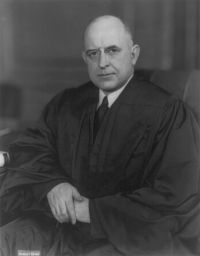
Portrait of Stanley Forman Reed Stanley Forman Reed United States v. Pewee Coal Company…

Where the owner's losses are what they would have been without the 'taking,' the owner has suffered no loss or damage for which compensation is due. Cf. Marion & Rye Valley R. Co. v. United States, 270 U.S. 280, 46 S.Ct. 253, 70 L.Ed. 585. The measure of just compensation has always been the loss to the owner, not the loss or gain to the Government.
Source: Wikisource

Portrait of Stanley Forman Reed Stanley Forman Reed United States v. Pewee Coal Company…

Such a view would lead to disastrous consequences where properties necessarily taken for the benefit of the Nation have a long record of operating losses, e.g., certain railroads, coal mines, or television broadcasting stations. The question of who bears such losses is not, I think, 'conceptually distinct' from the question of just compensation. Losses or profits on the temporary operation after the declaration or judgment of taking are factors to be taken into consideration in determining what is just compensation to the owner.
Source: Wikisource

Portrait of Stanley Forman Reed Stanley Forman Reed United States v. Pewee Coal Company…

A second kind of taking is where, as here, the Government, for public safety or the protection of the public welfare, 'takes' the property in the sense of assuming the responsibility of its direction and employment for national purposes, leaving the actual operations in the hands of its owners as government officials appointed to conduct its affairs with the assets and equipment of the controlled company. Examples are the operation of railroads, motor carriers, or coal mines.
Source: Wikisource

Get perspective with Kwize: daily news enlightened by great literature