Summary

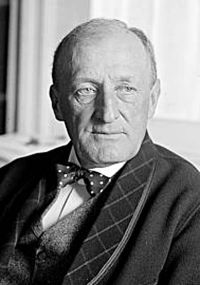
Portrait of James Clark McReynolds James Clark McReynolds Maas Waldstein Company v. United States…

Under paragraph 3, Article 52, it is our belief that through the simple form and manner of our organization we are placed at a disadvantage in comparison with representative concerns in a similar trade or business. In accordance with the regulations applying to Excess Profits Tax Returns, we have reduced the value of the tangible assets acquired at the time of our organization to $100,000.
Source: Wikisource

Portrait of James Clark McReynolds James Clark McReynolds Maas Waldstein Company v. United States…

That upon the allowance of a claim for the refund of or redi t for internal revenue taxes paid, interest shall be allowed and paid upon the total amount of such refund or credit at the rate of one-half of 1 per centum per month to the date of such allowance, as follows: (1) if such amount was paid under a specific protest setting forth in detail the basis of and reasons for such protest, from the time when such tax was paid. * * *'
The petitioner, a domestic corporation, on March 28, 1918, filed its income and excess profits tax return for the year 1917.
Source: Wikisource

Portrait of James Clark McReynolds James Clark McReynolds Maas Waldstein Company v. United States…

Under paragraph 4, Article 52, our invested capital when computed in the manner specified in the regulations, is manifestly seriously disproportionate to the taxable income. This arises in part for the reasons specified in the preceding paragraph, and in part for the reason specified under (b) in paragraph 4. About 90% of our total net income was earned through the operation of our gun cotton plant. This plant was erected solely for war purposes to meet the needs of a foreign government and will not be wanted for the purpose of our trade or business after the termination of the war.
Source: Wikisource

Get perspective with Kwize: daily news enlightened by great literature