Summary

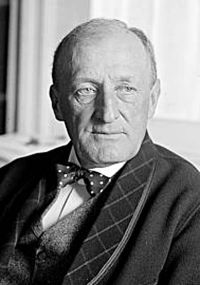
Portrait of James Clark McReynolds James Clark McReynolds McCoy v. Union Elevated Railroad Company…

It is almost universally held that in arriving at the amount of damage to property not taken allowance should be made for peculiar and individual benefits conferred upon it; compensation to the owner in that form is permissible. And we are unable to say that he suffers deprivation of any fundamental right when a state goes one step further and permits consideration of actual benefits enhancement in market value-flowing directly from a public work, although all in the neighborhood receive like advantages.
Source: Wikisource

Portrait of James Clark McReynolds James Clark McReynolds McCoy v. Union Elevated Railroad Company…

He is entitled to receive the value of what he has been deprived of, and no more. To award him less would be unjust to him; to award him more would be unjust to the public. Consequently, when part only of a parcel of land is taken for a highway, the value of that part is not the sole measure of the compensation or damages to be paid to the owner; but the incidental injury or benefit to the part not taken is also to be considered. When the part not taken is left in such shape or condition, as to be in itself of less value than before, the owner is entitled to additional damages on that account.
Source: Wikisource

Portrait of James Clark McReynolds James Clark McReynolds McCoy v. Union Elevated Railroad Company…

During the trial, over plaintiff's objections, questions concerning evidence were determined in accordance with repeated rulings by the Illinois Supreme Court that the effect of construction, maintenance, and operation of an elevated road upon market value was the point for determination, and that increase in such value caused by the improvement itself should be considered and treated as a special benefit, although enjoyed by other neighborhood property.
Source: Wikisource

Get perspective with Kwize: daily news enlightened by great literature