Summary

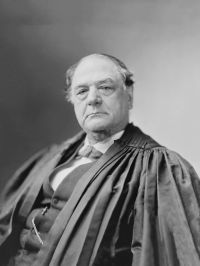
Portrait of Noah Haynes Swayne Noah Haynes Swayne Morgan v. Railroad Company — Opinion of the Court

The provisions are simply a mode of conveyance which the grantor may pursue, if he chooses to do so. The language of the statute is clear and explicit. There is no room for doubt. The case is one in which the rule applies, that there shall be no construction where there is nothing to construe. Dwarris, Statutes, pp. 143, 144. There can be no doubt of the power of the legislature so to provide.
Was the intention of the appellant to dedicate the premises to the railroad company for its use for depot purposes, as claimed, 'named, expressed, or intended'?
Source: Wikisource

Portrait of Noah Haynes Swayne Noah Haynes Swayne Morgan v. Railroad Company — Opinion of the Court

A street thirty feet in width, extending across both strips, was laid out in 1873. Before that, the depot could not have been reached from any direction without crossing private property, if the strips were such, or taking the hazards of passing along the roadway of the company for a distance of five hundred feet. The strips were therefore indispensable to the use of the depot when it was located and built.
From the time of recording the town plat up to the year 1867, no taxes were paid on the premises by either party. Morgan claimed no rents until 1865; he received none until 1867
Source: Wikisource

Portrait of Noah Haynes Swayne Noah Haynes Swayne Morgan v. Railroad Company — Opinion of the Court

He is not permitted to deny a state of things which by his culpable silence or misrepresentations he had led another to believe existed, and who has acted accordingly upon that belief. The doctrine always presupposes error on one side and fault or fraud upon the other, and some defect of which it would be inequitable for the party against whom the doctrine is asserted to take advantage.
Source: Wikisource

Get perspective with Kwize: daily news enlightened by great literature