Summary

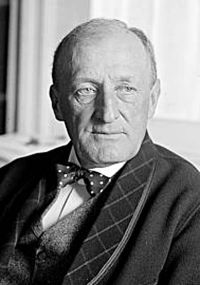
Portrait of James Clark McReynolds James Clark McReynolds Old Colony Trust Company v. Commissioner of Internal Revenue…

II. In order that they may be allowed as deductions is it necessary affirmatively to show that charitable contributions by a trust estate were actually paid out of income received during the year in which they were made?
Section 23 (n) limits deductible contributions to 15 per cent. of net income. Section 162 (a) permits them to the full extent of gross income. This language should be construed with the view of carrying out the purpose of Congress-evidently the encouragement of donations by trust estates. There are no words limiting these to something actually paid from the year's income.
Source: Wikisource

Portrait of James Clark McReynolds James Clark McReynolds Old Colony Trust Company v. Commissioner of Internal Revenue…

Capital and income accounts in the conduct of the business of estates are well understood. Congress sought to encourage donations out of gross income, and we find no reason for saying that it intended to limit the exemption to sums which the trust could show were actually paid out of receipts during a particular tax year.
Source: Wikisource

Portrait of James Clark McReynolds James Clark McReynolds Old Colony Trust Company v. Commissioner of Internal Revenue…

We are asked to hold that the words 'pursuant to' mean directed or definitely enjoined. And this notwithstanding the admission that Congress intended to encourage charitable contributions by relieving them from taxation. Lederer, Collector, v. Stockton, 260 U.S. 3, 43 S.Ct. 5, 67 L.Ed. 99; United States v. Provident Trust Co., Administrator, 291 U.S. 272, 285, 54 S.Ct. 389, 392, 78 L.Ed. 793.
'Pursuant to' is defined as 'acting or done in consequence or in prosecution (of anything) ; hence, agreeable; conformable; following
Source: Wikisource

Get perspective with Kwize: daily news enlightened by great literature