Summary

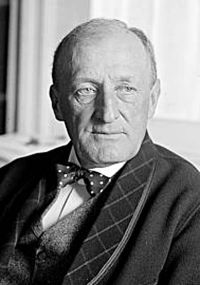
Portrait of James Clark McReynolds James Clark McReynolds Reed v. Director General of Railroads…

In actions under the federal act the doctrine of assumption of risk certainly has no application when the negligence of a fellow servant which the injured party could not have foreseen or expected, is the sole, direct, and immediate cause of the injury. To hold otherwise would conflict with the declaration of Congress that every common carrier by railroad while engaging in interstate commerce shall be liable to the personal representative of any employee killed while employed therein when death results from the negligence of any of the officers, agents or employees of such carriers.
Source: Wikisource

Portrait of James Clark McReynolds James Clark McReynolds Reed v. Director General of Railroads…

Through the yard ran also the main passenger tracks of defendant, and, at the points where other tracks crossed over or connected therewith, derailing devices had been wisely installed for the purpose of preventing locomotives and cars using the other tracks from running on to or over the passenger tracks, at a time when passenger trains were standing or traveling thereon, and thereby possibly causing collision and serious loss of life.
Source: Wikisource

Portrait of James Clark McReynolds James Clark McReynolds Reed v. Director General of Railroads…

It was so set on this occasion, but either through the negligence of decedent himself, or of the engineer in failing to notice or heed the signaling of decedent, the locomotive did not stop in time, the caboose was derailed and decedent was crushed to death between it and cars on an adjoining track.'
Accepting the view that the engineer's negligence was the proximate cause of the fatal injury, the court below held the decedent had assumed the risk of such negligence and the master was not liable, citing among other cases Seaboard Air Line v.
Source: Wikisource

Get perspective with Kwize: daily news enlightened by great literature