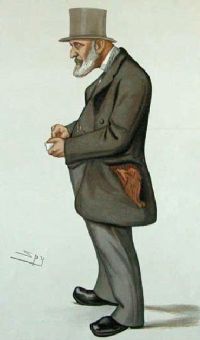
James Edwin Thorold Rogers

James Edwin Thorold Rogers

Summary

Portrait of James Edwin Thorold Rogers James Edwin Thorold Rogers The Story of Nations - Holland… (1886)

It is a mistake to say that persecution will not destroy a creed. If it be quite systematic and entirely unscrupulous it can utterly extinguish a creed. It did so with Protestantism in Flanders, France, Spain, Austria, and Bohemia. It did so with the Roman religion in Sweden, in Denmark, in much of North Germany. The Dutch and the Flemish nations were severed by the Inquisition, and the arts of diplomacy have been unable to unite them.
Source: Wikisource

Portrait of James Edwin Thorold Rogers James Edwin Thorold Rogers The Story of Nations - Holland… (1886)

It is not, I think, too much to say, that had the Dutch stood entirely aloof in the war of the Austrian succession, and not suffered themselves to be embroiled in it, the Republic would have been saved, and though it might not have been possible to have resisted revolutionary France, it would not have collapsed so ignominiously as it did. During the disputes about the slave trade with the Spanish colonies, Holland had contrived to preserve her neutrality, though Dutch interests were so universal that no two nations could quarrel without Amsterdam suffering some heavy pecuniary loss.
Source: Wikisource

Portrait of James Edwin Thorold Rogers James Edwin Thorold Rogers The Story of Nations - Holland… (1886)

Some changes, to be sure, were made, one of which was of great significance to Holland. The Spanish Netherlands were transferred to Austria, and a country which France always eagerly coveted was given to a sovereign who had enough to do to hold his own in Germany, and would find it difficult to defend his new acquisition. France had already, as the Dutch too well knew, got a foothold in the Netherlands by the acquisition of Dunkirk, and had winked at or encouraged its becoming a nest of pirates.
Source: Wikisource

Get perspective with Kwize: daily news enlightened by great literature