Summary

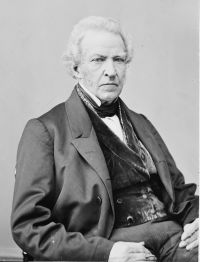
Portrait of James Moore Wayne James Moore Wayne,  Flowers v. Foreman — Opinion of the Court

“ It is not necessary, to constitute an eviction, that the purchaser of land should be actually dispossessed. (11 Rob., 397.) It was also ruled, in the same case, that an eviction may take place when the vendee continues to hold the property under a different title from that transferred to him by his vendor. In this instance, Mulhollan's representatives held the title to a part of the land, originally bought by him from Davis as a whole, by the purchase of James and Coleman Calvit's undivided eighth. ”
Source: Wikisource

Portrait of James Moore Wayne James Moore Wayne,  Flowers v. Foreman — Opinion of the Court

“ The seizin usually continues for a year and a day, but may be prolonged by an act of the court, and may be terminated whenever the heirs shall deliver to the executor a sum sufficient to pay the movable legacies. The seizin of the executor is distinct from and paramount to the seizin which the law vested in the heir immediately on the death of his ancestor, and the heir can only deprive the executor of it by providing security for the performance of his obligations. ”
Source: Wikisource

Portrait of James Moore Wayne James Moore Wayne,  Flowers v. Foreman — Opinion of the Court

“ After the rendition of the Supreme Court's decree, Charles Mulhollan died. His will was admitted to probate on the 11th July, 1846. On the same day his death was suggested, and an order was passed to renew the suit in the names of his legal representatives. Three days afterwards, Thomas O. Moore, the executor of Mulhollan, paid to James and Coleman Calvit $2,400 for a relinquishment of their claims to the land in controversy, and of all their rights in the judgment which had been rendered in their favor. ”
Source: Wikisource

Get perspective with Kwize: daily news enlightened by great literature