Summary

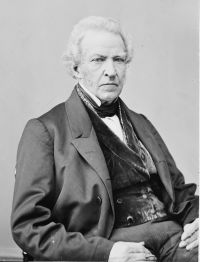
Portrait of James Moore Wayne James Moore Wayne Very v. Watkins — Opinion of the Court

The Supreme Court of Arkansas, on an appeal, held it to be in equity a clear accord and satisfaction, upon a good consideration, because the creditor by that arrangement received payment of nearly half of the debt in advance, and because the residue was to be paid almost four years before the debt became due. In the mean time, Very brought a bill to foreclose the mortgage in the Circuit Court of the United States for the district of Arkansas, to which Levy set up the same defence by way of answer.
Source: Wikisource

Portrait of James Moore Wayne James Moore Wayne Very v. Watkins — Opinion of the Court

The tenth assignment of error relates to the instruction of the court, that by the decree of the court below in August, 1850, and the affirmance of it by this court in 1851, Ross ceased to act as receiver, and from thenceforth held the jewelry in question only as the trustee of Very. That decree put an end to the controversy, excepting to what remained to be done under the mandate of the court for the execution of its decree. It is true that Ross, as receiver, had not been discharged by a formal order upon motion when the decree was made
Source: Wikisource

Portrait of James Moore Wayne James Moore Wayne Very v. Watkins — Opinion of the Court

We have examined with some pains the plaintiff's assignments of error, without finding cause for sustaining either of them. The first is, that the court refused to permit a witness to testify to a conversation between himself and Cummins, the co-surety of Watkins, for the purpose of fixing upon the latter a liability in this action to the plaintiff. It seems that Watkins was not present at that conversation.
Source: Wikisource

Get perspective with Kwize: daily news enlightened by great literature