Summary

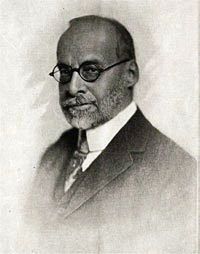
Portrait of John Ames Mitchell John Ames Mitchell The Pines of Lory — II. Froth of the Sea (1901)

The priest answered pleasantly, but the tone of the conversation had given him little pleasure. Folly was in the air, and Elinor Marshall, to his surprise, seemed in harmony with it. Heretofore he had known her as a thoughtful, serious-minded woman, with a leaning to melancholy; and this unexpected and evidently enjoyable flight–or plunge–into pure nonsense, caused him a distinct uneasiness. The girl was brightening up, even becoming merry; a state of mind that never leads to a nunnery.
Source: Wikisource

Portrait of John Ames Mitchell John Ames Mitchell The Pines of Lory — II. Froth of the Sea (1901)

For on the battle-field there is always one chance of victory. But I have not been fighting the Boers. I was trying to help the Boers against the English.”
“Ah, good!” said the priest. “You were on the right side.”
But the lady shook her head. “I don’t know about that. I should have joined the English and fought against the Boers.”
“But, my dear child,” exclaimed Father Burke, “the cause of the Boers is so manifestly the cause of right and justice! They were fighting for their freedom,–the very existence of their country.”
Source: Wikisource

Portrait of John Ames Mitchell John Ames Mitchell The Pines of Lory — II. Froth of the Sea (1901)

A fresh point of view always broadens the horizon.”
Ignoring her tone, he answered in an off-hand, amiable way:
“Of course there is no reason why a woman should not enter politics or anything else, if she wishes. And there is no reason why a rose should not aspire to be a useful potato. But potatoes will always be cheaper than roses.”
She smiled wearily and leaned back. As their eyes met he detected a look of disappointment–perhaps at her discovery of yet one more man like all the others, earthy and superficial.
Source: Wikisource

Get perspective with Kwize: daily news enlightened by great literature