John C. Van Dyke

John C. Van Dyke

Summary

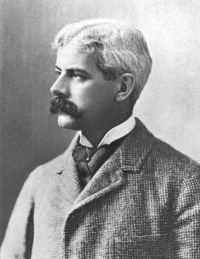
Portrait of John C. Van Dyke John C. Van Dyke Century Magazine (1899)

Opie seems to have been self-taught, and no one knows how he took his bent toward broad masses of light and shade and rather coarse handling. It is easy to say that he was influenced by Rembrandt and Caravaggio, but there is no record that he knew anything about either of these painters. Indeed, it is more reasonable to assume that his hand was rather coarse by nature, and that he painted in broad masses because he had neither the delicacy nor the skill to paint otherwise. He never at any time approximated a worker in cloisonné.
Source: Wikisource

Portrait of John C. Van Dyke John C. Van Dyke Century Magazine (1899)

Opie was born at St. Agnes, near Truro, and was the son of a carpenter. He preferred picture-making to carpentry, and was soon painting country folk at half a guinea a head. Dr. Wolcott ("Peter Pindar") discovered him at fifteen, and helped him with both money and advice. In 1779 Opie and Wolcott went to Falmouth to improve their joint prospects, and the year after they went up to London. It was agreed that they should share fortune alike, Opie to work with his brush and Wolcott to point out his wonderfulness with pen and tongue
Source: Wikisource

Portrait of John C. Van Dyke John C. Van Dyke Century Magazine (1899)

The longest-living author of this work died in 1932, so this work is in the public domain in countries and areas where the copyright term is the author's life plus 91 years or less. This work may be in the public domain in countries and areas with longer native copyright terms that apply the rule of the shorter term to foreign works.
Source: Wikisource

Get perspective with Kwize: daily news enlightened by great literature