Summary

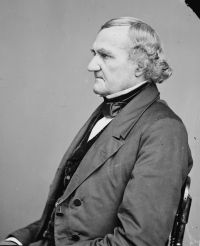
Portrait of John Catron John Catron Milnor v. Metz — Opinion of the Court

That there was no purpose of Milnor to make the dedication claimed; and that his purpose, either way, is immaterial, as the insolvent law determines, without reference to it, what shall, and what shall not, be included in the assignment. 2. That the insolvent, at the time of his assignment, had no such interest in the claim upon congress as could pass by that instrument. 3. That congress had the right to model their relief at pleasure, and having granted it to Milnor, and not to his assignee, the latter is without relief by the present suit.
Source: Wikisource

Portrait of John Catron John Catron Milnor v. Metz — Opinion of the Court

The act of congress limits the salaries of gaugers to $1500; and thus it is obvious, that Milnor and Thompson had not a scintilla of legal right to further compensation from the United States. A claim of this kind, being one for a gratuity, a benefaction, cannot be passed under the assignment. It must be an actual interest, not an expectancy. If the assignee of Milnor had any right, it should have been presented to congress.
Source: Wikisource

Portrait of John Catron John Catron Milnor v. Metz — Opinion of the Court

The right to compensation is property belonging to the party who has done the services, and as such belongs to the creditors of the insolvent. The principles which are in question in this case, were settled by the court in the case of Comegys v. Vasse, 1 Pet. 193. It was held, in that case, that it was immaterial who presented the claim. The money recovered belonged to the assignee.
Coxe denied, that any legal claim existed on the United States for compensation. The salary of the gaugers was fixed by law, and whatever else they obtained was a gratuity.
Source: Wikisource

Get perspective with Kwize: daily news enlightened by great literature