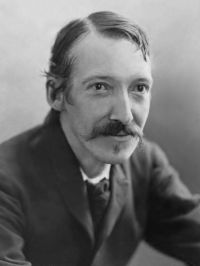
 Robert Louis Stevenson,
Underwoods
(1887)
Robert Louis Stevenson,
Underwoods
(1887)
“ The gauger walked with willing foot, And aye the gauger played the flute; And what should Master Gauger play But Over the hills and far away? ”
Robert Louis Stevenson,
Underwoods
(1887)
“ The gauger walked with willing foot, And aye the gauger played the flute; And what should Master Gauger play But Over the hills and far away? ”
bart. Sir Arthur Percival Heywood, Minimum Gauge Railways
“ In regard to the third head, it may be noticed as a curious fact, that the strong and commendable predilections of English engineers for the standard gauge, whenever obtainable, appear to lead them, where circumstances compel the adoption of a narrower one, to advocate as little reduction as possible. ”
 Joshua Rose,
Modern Machine-Shop Practice, Volumes I and II
Joshua Rose,
Modern Machine-Shop Practice, Volumes I and II
“ The great majority of fits made under the standard gauge system consist of cylindrical pieces fitting into holes or bores. Suppose then that we have a plug and a collar gauge each of an inch diameter, and a reamer to fit the collar gauge, and we commence to ream holes and to turn plugs to fit the collar gauge, then as our work proceeds we shall find that as the reamer wears, the holes it makes will get smaller, and that as the collar gauge wears, its bore gets larger, and it is obvious that the work will not go together. ”
1911 Encyclopædia Britannica, Volume 11… (1911)
“ In the mechanical arts gauges are employed in great variety to enable the workmen to ascertain whether the object he is making is of the proper dimensions (see Tool) , and similar gauges of various forms are employed to ascertain and to specify the sizes of manufactured articles such as wire and screws. ”
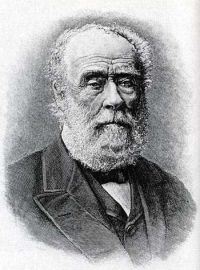 Joseph Whitworth,
Miscellaneous Papers on Mechanical Subjects
(1858)
Joseph Whitworth,
Miscellaneous Papers on Mechanical Subjects
(1858)
“ In the case of the external gauge ·5770 inch diameter, the external and internal gauges are so near in size that the one does not go through the other when dry, and if pressed in, there would be danger of the surface particles of the one becoming imbedded in or among those of the other, which I have seen happen, and then no amount of force will separate them: but with a small quantity of oil on their surfaces, they move easily and smoothly. ”
Frank Parker Stockbridge, Measure Your Mind: The Mentimeter and How to Use It
“ The gauge is a piece of steel with two notches or openings. The shells which are too small pass through the first opening and fall into a box of rejects below. Those that do not fall through are tried on the second opening and, if they pass through, they are of the right size. If they fail to pass through they are too large and are thrown aside. The operator sits in front of her gauge and tries each shell at one opening and then another, just as rapidly as she can move her hands up and down. ”
Joshua Rose,
Modern Machine-Shop Practice, Volumes I and II
“ When only a single set of plug and collar gauges are at hand the plug or the collar gauge may be kept to maintain the standard, the other being used to work to, both for inside and outside work. Suppose, for example, that a plug and collar gauge are used for a certain piece of work and that both are new, then the reamer may be made from either of them, because their sizes agree, but after they have become worn either one or the other must be accepted as the standard of size to make the reamer to. ”
Joshua Rose,
Modern Machine-Shop Practice, Volumes I and II
“ If the work is not to size they will not determine how much the error or difference is, hence they are gauges rather than measuring tools. It is obvious, however, that if the work is sufficiently near to size, the plug or male gauge may be forced in, or the collar or female gauge may be forced on, and in this case the tightness of the fit would indicate that the work was very near to standard size. ”
Charles Shattuck Hill, The New International Encyclopædia (1905)
“ A 6-foot gauge was introduced on the Erie Railway and retained long after the standard gauge had become general in the United States. As time passes, however, the 4 foot 81⁄2 inch gauge is becoming more common all over the world. The method of fastening rails to the ties varies. In America hook-headed spikes are almost universally used; the bull-headed rail used in England is wedged into cast-iron chairs which are bolted to the ties; in Europe considerable use is made of bolts; and when steel ties are employed various forms of clamping devices tightened by means of bolts or wedges are used. ”
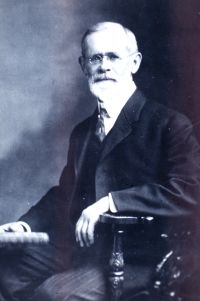 Cleveland Abbe,
1911 Encyclopædia Britannica, Volume 18…
(1911)
Cleveland Abbe,
1911 Encyclopædia Britannica, Volume 18…
(1911)
“ Although this deficit with increasing altitude has been fully recognized for a century, yet no effort has been made until recent years to make a proper correction or to eliminate this influence of the wind at the mouth of the gauge. Professor Joseph Henry, about 1850, recommended to the observers of the Smithsonian Institution the use of the “pit-gauge.” About 1858 he recommended a so-called shielded gauge, namely—a simple cylindrical gauge 2 in. in diameter, having a wide horizontal sheet of metal like the rim of an inverted hat soldered to it. ”
William Hemingway Mills, Railway Construction
“ Gauge.—The gauge of a railway, or its width from inside to inside of rails, affects both its cost and efficiency. If the gauge be exceptionally wide, then the expenditure on works and rolling-stock will be proportionately heavy; and although theoretically the extra wide gauge may possess greater capabilities for accommodation and high-speed travelling, we may find in practice that the necessary requirements may be provided on a much more moderate gauge. ”
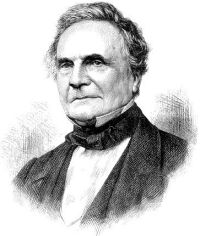 Charles Babbage,
Passages from the Life of a Philosopher
(1864)
Charles Babbage,
Passages from the Life of a Philosopher
(1864)
“ The question of the gauges has long been settled. A small portion of broad gauge exists, but it is probable that it will ultimately be changed. The vast expense of converting the engines and the rolling stock for use on the narrower gauge presents the greatest obstacle. It may, however, be interesting to learn the opinion of the father of railways at an early period of their progress. I have already mentioned the circumstances under which my acquaintance with George Stephenson began. They were favourable to that mutual confidence which immediately arose. ”
Edwin W. Foster, Elementary woodworking (1903)
“ Hold gauge bottom side up in left hand and rule in right. Place end of rule against gauge block and the measurement desired at spur. Turn set screw. The gauge is then accurately set. In the cut the gauge is set at one inch and is ready for use. Fig. 7. Setting the Marking GaugeTo gauge a line parallel to the edge of a block hold the tool firmly, with thumb and forefinger encircling gauge block. ”
Various, Harper's Young People, April 19…
“ Roads have been built 7 feet, 6 feet, 5 feet 5 inches, 5 feet, 4 feet 9 inches, 3 feet 6 inches, 3 feet 31⁄2 inches, 3 feet, and 2 feet, but the very broad and very narrow gauges are losing favor, and 4 feet 9 inches is the standard, 6 feet being generally known as broad gauge, and 3 feet 6 inches as narrow gauge, though anything over 4 feet 9 inches is broad, and anything under is narrow. ”
Sir Cusack P. Roney, Rambles on Railways
“ There is a capital run of railway between York and Darlington, forty-four miles, almost level, and nearly straight. It was on this line that, just twenty years ago, most of the experiments and trials were made, instituted to vindicate the narrow gauge as the best for carrying on the traffic of the country. These trials formed one of the many phases of the great battle of the gauges, fought so vigorously by its champions on each side; yet, in the short space of the fifth of a century, how many of these then active and doughty men have passed away from us for ever. ”
Sir John Rennie, Autobiography of Sir John Rennie…
“ The Great Western realize a speed of 45 miles an hour without the least risk, i.e. including stoppages, whereas the narrow gauge does not do more than 35 to 37 miles an hour, and that probably with a greater wear and tear of the rails. A medium therefore between the two gauges, that is 5 feet 6 inches or 6 feet, instead of 4 feet 81⁄2 inches or 7 feet, appeared to my brother and self the proper gauge; and if such had been adopted we should never have heard of the 7-feet gauge, and the 5 feet 6 inches or 6-feet gauge would have been universally adopted, to the great advantage of all. ”
bart. Sir Arthur Percival Heywood, Minimum Gauge Railways
“ Material of any kind can be as effectively delivered on ship-board by narrow gauge railway wagons as by horses and carts, if not better. In reckoning up the cost of transhipment from small wagons on to a railway system—no great matter with proper appliances—it must not be lost sight of that, even if a branch of standard gauge were constructed to many establishments, the large wagons cannot, as a rule, be got up to the point where the material lies, and a preliminary transference in barrows or carts is necessary. ”
Portal:United States Congress, United States Statutes at Large (1846)
“ April 26, 1816. [Obsolete.] Chap. XCV.—An Act to increase the compensation now allowed by law to inspectors, measures, weighers and gaugers, employed in the collection of the customs. [1] Increase of inspectors’ compensation. ”
William Henry Doolittle, Inventions in the Century
“ The car in which the passenger finds himself is a marvel of woodwork and upholstery—a description of the machinery and processes for producing which belongs to other arts. The railroad tracks upon which the vehicle moves are in themselves the results of many inventions. There is the width of the track, and it was only after a long and expensive contest that countries and corporations settled upon a uniform gauge. The common gauge of the leading countries and roads is now 4 feet 81⁄2 inches. A greater width is known as a broad gauge, a less width as a narrow gauge. ”
William Hemingway Mills, Railway Construction
“ When considering the cost of construction and working of a narrow-gauge railway as compared with one of the standard gauge, there are certain items which are common to both, and in which the narrow gauge could not be expected to obtain any advantage over the standard gauge. ”
bart. Sir Arthur Percival Heywood, Minimum Gauge Railways
“ The shops are lit by gas, and the 15 in. gauge line runs throughout. The construction, both in wood and iron, is done as far as possible to template, and every endeavour is made to turn out the very best work, which is perhaps the more easily attained in that there are no profits to be considered. At the same time it should be explained that the shops and machinery are, throughout, though good and sufficient for their purpose, in no way models of excellence. ”
1911 Encyclopædia Britannica (1911)
“ In the case of a line of 21⁄2 ft. gauge, with a ruling gradient of 1 in 40, a maximum speed of 15 m. an hour and a minimum radius of curve of 300 ft. have been prescribed. Curves of still smaller radius have entailed a maximum speed of 10 m. an hour. It must be understood that a railway described as “light” is not necessarily built of narrower gauge than the standard. Many lines, indeed, have been designed on the normal 4 ft. ”
Sir Edward Denny Bacon, Saint Vincent, with notes and publishers' prices
“ The gauge in 2 centimetres varies from 14 to 15, this variation arising from a slight, but frequent, irregularity in the spacing of the pins or plungers of the machine. It may be possible by moving a gauge backwards and forwards along a line of perforations to hit off a space of 2 centimetres containing rather more than 15 or fewer than 14 holes, but we have not been able to do so ourselves. With the best of goodwill the limits we have attained are 14 in one direction and 15 in the other, and we rather suspect that the frequent records seen of a gauge of 151⁄2, and sometimes even of 16, in St. ”
bart. Sir Arthur Percival Heywood, Minimum Gauge Railways
“ It must be understood that I do not here attempt to enter upon the comparative merits of narrow gauge railways generally, but merely to give particulars of what has come within my own experience. To facilitate a comprehension of the conditions under which I have worked, it will be well to explain that I make no pretension to be considered a professional engineer, and that I speak rather as a self-taught mechanic and surveyor. ”
bart. Sir Arthur Percival Heywood, Minimum Gauge Railways
“ This attitude is probably due to ignorance of what can be done on the narrowest gauges, for, in spite of the fact that many hundreds of miles of lines of less than 2 ft. gauge are at work abroad, our professional advisers persist in regarding such railways as mere toys. Yet a line of 15 in. gauge has been at work in this country for twenty years, on which thousands of passengers have been carried without a single accident, as many as 120 in one train, over gradients as steep as 1 in 20, the goods traffic being worked in all weathers up a long gradient of 1 in 11 without difficulty. ”
 Galileo Galilei,
The Sidereal Messenger of Galileo Galilei
Galileo Galilei,
The Sidereal Messenger of Galileo Galilei
“ But in order that any one may be a little more certain about the magnifying power of his instrument, he shall fashion two circles, or two square pieces of paper, one of which is 400 times greater than the other, but that will be when the diameter of the greater is twenty times the length of the diameter of the other. Then he shall view from a distance simultaneously both surfaces, fixed on the same wall, the smaller with one eye applied to the telescope, and the larger with the other eye unassisted ”
George Frederick Deacon, 1911 Encyclopædia Britannica, Volume 28… (1911)
“ Where suitably placed long-period gauges exist, and where care has been exercised in ascertaining the authenticity of their records and in making the comparisons, the short records of the local gauges may be thus carried back into the long periods with nearly correct results. ”
Wilhelm Westhofen, The Forth Bridge (1890)
“ He considered that an exceptional gauge should be confined to a district of country where break of gauge is unimportant by reason of non-interchange of traffic, and even then he preferred to adopt a light railway on the standard gauge, except under very peculiar circumstances, which must be very rare indeed, when the narrow gauge would have some special advantages. ”
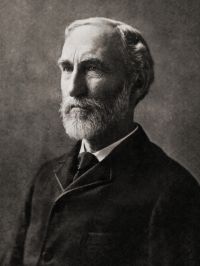 Josiah Willard Gibbs,
Scientific Papers of Josiah Willard Gibbs
(1906)
Josiah Willard Gibbs,
Scientific Papers of Josiah Willard Gibbs
(1906)
“ I should call his attention to the fact that Lagrange and Gauss used the notation to denote precisely the same as Hamilton by his , except that Lagrange limited the expression to unit vectors, and Gauss to vectors of which the length is the secant of the latitude, and I should show him that we have only to give up these limitations, and the expression (in connection with the notion of geometrical addition) is endowed with an immense wealth of transformations. ”
bart. Sir Arthur Percival Heywood, Minimum Gauge Railways
“ No one but an enthusiast would dare to contend that a two-foot gauge was the ideal width for a line employing twenty-ton locomotives and hauling about 100,000 passengers and some 150,000 tons of minerals and goods per annum. If this development could have been foreseen, the selected gauge would doubtless have been wider. Such a traffic, however, is quite outside the scope of this pamphlet, the logic of which is directed to shewing how a much smaller annual tonnage than has been hitherto deemed worthy of a railway may be profitably thus conveyed. ”
Edward Herbert Cameron, Of Yankee granite (1952)
“ Here, an endless chain allowed the loaded, descending cars to pull up the empty ascending ones.The standard gauge of American railroads is now 4 feet, 81⁄2 inches, measured between railheads, a standard adopted after many years of confusion before the present gauge dimension was adopted. Although Bryant described his track gauge as 5 feet, this dimension was measured between the “bearing points” of the wheels on the tracks. If the bearing points are assumed to be the center of the treads of the wheels, his gauge is found to match closely the present standard gauge. ”
William Hemingway Mills, Railway Construction
“ For main trunk lines, however, where a large, heavy, and fast passenger traffic will have to be worked, and where goods of all kinds, many of them bulky without being heavy, will have to be carried, an ample gauge must be selected to ensure convenience and safety. A liberal gauge permits the use of commodious rolling-stock without any great amount of lateral overhanging weight outside the wheels; whereas with a narrow gauge there is the tendency—if not the necessity—to use vehicles which [Pg 38] have too great a lateral overhang for proper stability, except at very moderate speeds. ”
Paul Adam, Practical Bookbinding
“ The gauges thus made are fixed with wax at convenient places, best on the middle line above and below the table but in such a way that they themselves are not touched by the plate. To prevent their falling off, a larger piece of cloth is pasted over them, always leaving the points visible. The surest preventive against falling off is to have screw-on gauges. A strip of metal having a slit in the middle can be screwed tightly to the table by means of a screw passed through the slit. At the end a steel point about 1/2 cm. long is riveted on. ”
