Summary

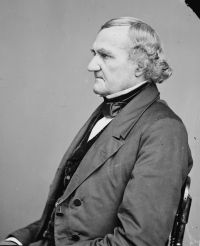
Portrait of John Catron John Catron Mississippi and Missouri Railroad Company v…

If the Iowa corporation could have been individually indicted for creating the nuisance, no reason exists why it should not be individually prosecuted in Chancery for its abatement. But the facts present a much more serious objection to the complainant's right to sue than either of those above stated. The Constitution of Illinois calls for the middle of the Mississippi river as the western boundary of that State, and as Iowa was admitted into the Union after Illinois, a line in the middle of the river is the dividing line between the States.
Source: Wikisource

Portrait of John Catron John Catron Mississippi and Missouri Railroad Company v…

It is also insisted with great earnestness that the public is entitled to the free navigation of the whole river from bank to bank, and as the western half of the river is undeniably within the jurisdiction of Iowa, it follows that the bridge is a clear nuisance within that district to the extent of half its length. According to this assumption no lawful bridge could be built across the Mississippi anywhere; nor could the great facilities to commerce, accomplished by the invention of railroads, be made available where great rivers had to be crossed.
Source: Wikisource

Portrait of John Catron John Catron Mississippi and Missouri Railroad Company v…

A bill in equity to abate a public nuisance, filed by one who has sustained special damages, has succeed to the former mode in England of an information in Chancery, prosecuted on behalf of the Crown, to abate or enjoin the nuisance as a preventive remedy. The private party sues rather as a public prosecutor than on his own account; and unless he shows that he has sustained, and is still sustaining, individual damage, he cannot be heard.
Source: Wikisource

Get perspective with Kwize: daily news enlightened by great literature