Summary

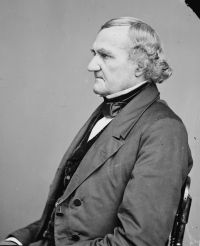
Portrait of John Catron John Catron Stockton v. Bishop (45 U.S. 155…

The fifth proposition presents a hypothetical statement of facts, and asks the court to instruct the jury that their existence would free the defendants from liability. It is denied that any right exists to force upon the court teasing and endless repetition of points favorable to one or the other side, where the law has been once correctly stated. But here, to have answered the question affirmatively would have been palpably wrong, for all the circumstances mentioned might be true, and yet the disaster have been occasioned by the intoxication of the driver.
Source: Wikisource

Portrait of John Catron John Catron Stockton v. Bishop (45 U.S. 155…

If the jury believe that the driver was a person of competent skill, of good habits, and in every respect qualified and suitably prepared for the business in which he was engaged, plaintiff cannot recover, unless they were clearly satisfied that, on this occasion, the disaster was attributable to the fault of the driver, and not to the darkness of the night, or other accidental cause, and that said accident would not have occurred but for the fault of the driver.
Source: Wikisource

Portrait of John Catron John Catron Stockton v. Bishop (45 U.S. 155…

If the first count be taken away, the second, standing by itself, does not afford sufficient foundation for the judgment. For example, it speaks of a 'day and year aforesaid,' but no day is named. It speaks of 'passengers in a coach,' but it is not averred to be a public coach. If the contract is to be implied, the fact that the stages were public must be averred. The declaration says that the defendants did not perform their duty. How? Was the plaintiff left behind? Or was the driver negligent? The second count does not say.
Source: Wikisource

Get perspective with Kwize: daily news enlightened by great literature