Summary

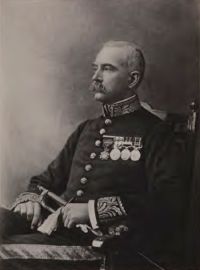
Portrait of John Claude White John Claude White Sikhim and Bhutan — Chapter XVII … (1909)

The fields round the fort were brilliant with the delicate green of young corn, just beginning to sprout, and the hedges were full of wild roses and pink and white spirea, while between the fields were planted lines of apricot-trees full of blossom, making a lovely picture. The crop of fruit is so plentiful that, in addition to carrying on a large trade in dried fruit, the people feed their cattle on apricots in winter
Source: Wikisource

Portrait of John Claude White John Claude White Sikhim and Bhutan — Chapter XVII … (1909)

After leaving Lhakhang I crossed the two branches of the Kuru-chhu just before they enter, as one stream, the mouth of this magnificent gorge. The road wound along the side of the hills some thousand feet above the river, and was in some places very pretty, with hedges of yellow and red roses, spirea, gooseberry and currant-bushes, apricot-trees, and a sort of blackthorn, but for the greater part it was uninteresting. The villagers en route turned out to meet me, and burnt incense, and at Dur they had a tent pitched for my lunch, and presented me with chang, the native liquor, milk, and eggs.
Source: Wikisource

Portrait of John Claude White John Claude White Sikhim and Bhutan — Chapter XVII … (1909)

Our Government, instead of making the most of so unique an opening, has, by the most incomprehensible regulations and orders, emanating from London, raised an insuperable barrier against any fellow countrymen who may desire to travel in Tibet, while foreigners, whom they are powerless to keep out, are given every possible assistance and help. Hence, notwithstanding the vast expenditure of money, the heavy loss of life, and the many hardships endured by the Lhasa Mission of 1904, Tibet has again become an absolutely closed country to all Englishmen.
Source: Wikisource

Get perspective with Kwize: daily news enlightened by great literature