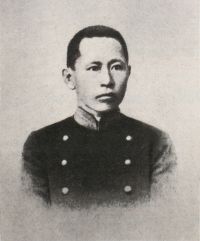
Gombojab Tsybikov

Gombojab Tsybikov

Summary

Portrait of Gombojab Tsybikov Gombojab Tsybikov Lhasa and Central Tibet (1903)

The affairs of Tibet in general are ruled by the hereditary aristocracy, whether it be the son who inherits his father's rights or the incarnate who inherits the rights of his predecessor. As the born aristocracy lives in strict isolation, not mingling with the common people, the central government, despite its deliberative character, may be called an aristocratic oligarchy.
Source: Wikisource

Portrait of Gombojab Tsybikov Gombojab Tsybikov Lhasa and Central Tibet (1903)

Here and there the merchants in Mongolia, besides their commercial operations, make collections of contributions for one or another enterprise of a monastery or an incarnate. If we add to this those immense sums that are being collected by famous and infamous lamas, whether they be invited to Mongolia or are there of their own accord, we can safely say that Mongolia to a considerable degree enriches Tibet.
Source: Wikisource

Portrait of Gombojab Tsybikov Gombojab Tsybikov Lhasa and Central Tibet (1903)

The sense of the descent is contained in the fact that the spirit guardian of learning becomes incarnated in the chosen prophet for the sake of the living beings. Of such spirit guardians there are many, and the prophets are correspondingly numerous. The superior among them is the one confirmed by the Chinese Government—the Prophet Naichung-Choichong, whose gold-crowned temple and church suite is in the shady garden southeast of the monastery of Brebung. He is appealed to for prophecies, not only by ordinary mortals, but by all the higher clergy, including the Dalai Lama.
Source: Wikisource

Get perspective with Kwize: daily news enlightened by great literature