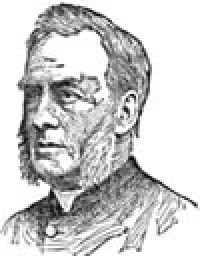
John Cunningham Geikie

John Cunningham Geikie

Summary

Portrait of John Cunningham Geikie John Cunningham Geikie Hammersmith, Fulham and Putney

If we enter the borough of Fulham at the Hammersmith end, we come upon one of the most interesting associations of the whole district, just before the North End Road makes a decided bend. [Pg 36] Here are two houses, formerly one, called the Grange, in which the novelist Samuel Richardson passed the greater part of his life. This pompous, vain little man, who never to the end of his life abated one whit of his savage envy of his successful contemporaries, was endowed with the genius of originality which prompted him to write as no one had ever thought of writing before.
Source: Gutenberg

Portrait of John Cunningham Geikie John Cunningham Geikie Hammersmith, Fulham and Putney

In the High Street, which is built up with small shops for a short distance, stands on the north side, well back from the road, the King's Head Inn, with its wonderful signboard displayed in the garden, its big, old-fashioned bay-windows, curious low-ceilinged rooms, and weather-boarded sides, shaded by great elms, giving it a very picturesque aspect.
Source: Gutenberg

Portrait of John Cunningham Geikie John Cunningham Geikie Hammersmith, Fulham and Putney

On the south aisle hangs a plain, unpretentious little slab of marble to the memory of Thomas Worlidge, artist and engraver, who died 1766. His London house was in Great Queen Street, and in it he had been preceded by Kneller and Reynolds, but in his last years he spent much time at his "country house" at Hammersmith. Not far off is the name of Arthur Murphy, barrister and dramatic writer, died 1805. Above the south door is a monument of Sir Edward Nevill, Justice of the Common Pleas, died 1705. In the baptistery at the west end stands a beautiful font cut from a block of white veined marble.
Source: Gutenberg

Get perspective with Kwize: daily news enlightened by great literature