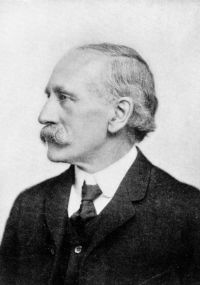
John Habberton

John Habberton

Summary

Portrait of John Habberton John Habberton Thornbright's Surprise (1892)

Tom got upon his feet and paced the floor of his two-room house. Could he honorably act, in business, for a man whom he hated so intensely—sell his services, for money, to a rival? On the other hand, could he refuse the chance, plainly and freely offered, to become a man of means, redeem his reputation as a business man, and reward Ettie Raytham, so far as his life's devotion could be a reward, for the graciousness with which she had apparently waited for him?
Source: Wikisource

Portrait of John Habberton John Habberton Thornbright's Surprise (1892)

Tom became interested and asked questions; it was like drawing teeth to get facts out of the broker, but finally Tom was "let in on the ground-floor," to the extent of a hundred shares on a very good thing, and gave his check for a thousand dollars as a margin. Then, in spite of an occasional intrusion of Wilke Straighten's exasperating little figure and big eyeglasses, Tom dreamed happily for hours before he fell asleep.
Tom soon began to grow rich—on the broker's books, and felt justified in calling frequently upon Miss Raytham. Slowly he ceased to fear Straighten as a rival
Source: Wikisource

Portrait of John Habberton John Habberton Thornbright's Surprise (1892)

He was not left penniless, for the income from the estate of his mother, who had died some years before, enabled him to dress well and keep his place in the club and in society. He had another trouble, though, which could not be abated by the keeping of a stiff upper lip and the belief that his father's death was to the dear, troubled old man a blessing in disguise. Tom had begun to believe himself in love with Ettie Raytham, a sweet little girl five or six years his junior. Like most young men in society, he imagined that he knew girls quite well
Source: Wikisource

Get perspective with Kwize: daily news enlightened by great literature