Summary

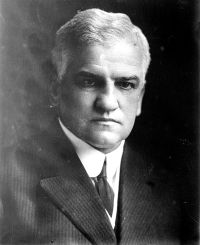
Portrait of John Hessin Clarke John Hessin Clarke Bowerman v. Hamner — Opinion of the Court

The National Bank Act imposes various specific duties on directors, other than those imposed by the common law, and it is obviously possible that a director may neglect one or more of the former, and not any of the latter, or vice versa. For example, in this case we have the gross negligence of the appellant, in failing to discharge his common-law duty to diligently administer the affairs of the bank, made basis for the contention that he did not 'knowingly' violate his statutory duty by permitting the excessive loans to be made.
Source: Wikisource

Portrait of John Hessin Clarke John Hessin Clarke Bowerman v. Hamner — Opinion of the Court

It is argued that the decree of the Circuit Court of Appeals should be reversed, and the cause remanded for a new trial for the reason that the trial in the District Court was on the theory that only the charge of statutory liability was involved and to be met by the appellant, and that he should have an opportunity to produce evidence, if he desires, on the issue of common-law liability.
Source: Wikisource

Portrait of John Hessin Clarke John Hessin Clarke Bowerman v. Hamner — Opinion of the Court

The rule thus announced would perhaps be applicable if the bill were limited to the charge of liability based solely upon the statutory prohibition of excessive loans, for it is reasonably clear that Bowerman did not have actual knowledge of the making of the loans, or of anything else connected with the conduct of the bank. He deliberately avoided acquiring knowledge of its affairs and wholly abdicated the duty of supervision and control which rested upon him as a director.
Source: Wikisource

Get perspective with Kwize: daily news enlightened by great literature