Summary

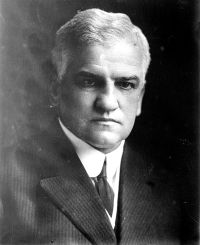
Portrait of John Hessin Clarke John Hessin Clarke Chapman v. Wintroath — Opinion of the Court

To this we must add that not only have later or divisional applications not been dealt with in a hostile spirit by the courts, but, on the contrary, designed as they are to secure the patent to the first discoverer, they have been favored to the extent that where an invention clearly disclosed in an application, as in this case, is not claimed therein but is subsequently claimed in another application, the original will be deemed a constructive reduction of the invention to practice and the later one will be given the filing date of the earlier, with all of its priority of right.
Source: Wikisource

Portrait of John Hessin Clarke John Hessin Clarke Chapman v. Wintroath — Opinion of the Court

In its decision the Court of Appeals holds that an inventor whose parent application discloses, but does not claim, an invention which conflicts with that of a later unexpired patent, may file a second application making conflicting claims, in order to have the question of priority of invention between the two determined in an interference proceeding, but only within one year from the date of the patent, and that longer delay in filing constitutes equitable laches, which bars the later application.
Source: Wikisource

Portrait of John Hessin Clarke John Hessin Clarke Chapman v. Wintroath — Opinion of the Court

When the great number of patents constantly being issued is considered, many of them of a voluminous and complicated character, such as we have in this case, with many and variously worded claims, such an implied notice must necessarily be precarious and indefinite to a degree which may well have been thought to be a sufficient justification for allowing the longer two-year period to inventors who must, at their peril, derive from such notice their knowledge of any conflict with their applications.
Source: Wikisource

Get perspective with Kwize: daily news enlightened by great literature