Summary

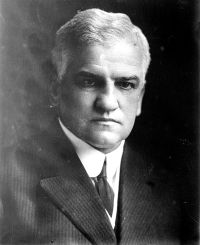
Portrait of John Hessin Clarke John Hessin Clarke Rosen v. United States (245 U.S. 467…

This is significant, because the disability to testify, of persons convicted of perjury, survived in some jurisdictions much longer than many of the other common-law disabilities, for the teason that the offense concerns directly the giving of testimony in a court of justice, and conviction of it was accepted as showing a greater disregard for the truth than it was thought should be implied from a conviction of other crime.
Source: Wikisource

Portrait of John Hessin Clarke John Hessin Clarke Rosen v. United States (245 U.S. 467…

Satisfied as we are that the legislation and the very great weight of judicial authority which have developed in support of this modern rule, especially as applied to the competency of witnesses convicted of crime, proceed upon sound principle, we conclude that the dead hand of the common-law rule of 1789 should no longer be applied to such cases as we have here, and that the ruling of the lower courts on this first claim of error should be approved.
Source: Wikisource

Portrait of John Hessin Clarke John Hessin Clarke Rosen v. United States (245 U.S. 467…

This regulation was obviously intended to supplement section 194 of the Criminal Code, under which the defendants were indicted, by supplying the detail which Congress contemplated should be so supplied when it left undefined 'or other authorized depository of mail matter.' Such a regulation if fairly within the scope of the authority given by Congress to make it, has the force and effect of law, and violations of it are punishable under the act which it supplements.
Source: Wikisource

Get perspective with Kwize: daily news enlightened by great literature