Summary

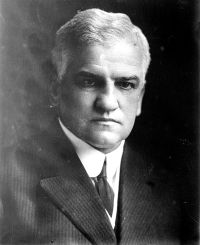
Portrait of John Hessin Clarke John Hessin Clarke Saalfield v. United States — Opinion of the Court

In the matter of delays the claimants were as much at fault and more, than the government, and the delay of the technical report for almost a year was reasonable ground for assuming that no report was likely to be made, or that if made it would not be favorable to the acceptance of the gun, which last, as we have seen, is shown by the finding of facts by the Court of Claims, to have been proved to be the case.
Source: Wikisource

Portrait of John Hessin Clarke John Hessin Clarke Saalfield v. United States — Opinion of the Court

The finding of the Court of Claims does not show that anything further was done until, on January 17, 1901, almost three years after this three months' contract was to have been completed, when, after the claimants had permitted almost a year to pass without accepting the suggestion of the government that modifications should be made in the gun and carriage to cure the defects which the firing test had disclosed, the Chief of Ordnance, with the approval of the Secretary of War notified the claimants that, for failure to deliver an acceptable gun, their contract had been declared null and void.
Source: Wikisource

Portrait of John Hessin Clarke John Hessin Clarke Saalfield v. United States — Opinion of the Court

Thereafter, on February 17, 1900, the claimants notified the Chief of Ordnance that they had employed two expert mathematicians to work out the various problems connected with the construction of their gun, and suggesting that they would like to have 'an army officer of practical experience with artillery' assigned to co-operate with their selected experts and that they would compensate him for the service.
Source: Wikisource

Get perspective with Kwize: daily news enlightened by great literature