Summary

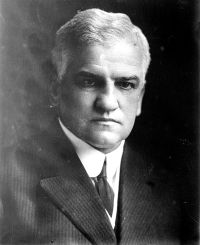
Portrait of John Hessin Clarke John Hessin Clarke Walsh v. Brewster — Opinion of the Court

The defendant answered, the case was tried upon an agreed statement of facts, and judgment was rendered in favor of the taxpayer, the defendant in error. The case is properly here by writ of error. Towne v. Eisner, 245 U.S. 418, 38 Sup. Ct. 158, 62 L. Ed. 372, L. R. A. 1918D, 254.
The defendant in error was not a trader or dealer in stocks or bonds, but occasionally purchased and sold one or the other for the purpose of changing his investments.
Source: Wikisource

Portrait of John Hessin Clarke John Hessin Clarke Walsh v. Brewster — Opinion of the Court

The second transaction involved the purchase in 1902 and 1903 of bonds of the International Mercantile Marine Company for $231,300, which were sold in 1916 for $276,150. This purchase was made through an underwriting agreement such that the purchaser did not receive any interest upon the amount paid prior to the allotment to him of the bonds in 1906, and he claimed that interest upon the investment for the time which so elapsed should be added as a part of the cost to him of the bonds.
Source: Wikisource

Get perspective with Kwize: daily news enlightened by great literature