Summary

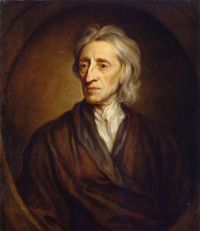
Portrait of John Locke John Locke An Essay Concerning Human Understanding…

Thirdly, the third branch may be called Semeiotike, or the doctrine of signs ; the most usual whereof being words, it is aptly enough termed also Logike, logic : the business whereof is to consider the nature of signs, the mind makes use of for the understanding of things, or conveying its knowledge to others. For, since the things the mind contemplates are none of them, besides itself, present to the understanding, it is necessary that something else, as a sign or representation of the thing it considers, should be present to it : and these are ideas.
Source: Wikisource

Portrait of John Locke John Locke An Essay Concerning Human Understanding…

For a man can employ his thoughts about nothing, but either, the contemplation of things themselves, for the discovery of truth ; or about the things in his own power, which are his own actions, for the attainment of his own ends ; or the signs the mind makes use of both in the one and the other, and the right ordering of them, for its clearer information.
Source: Wikisource

Portrait of John Locke John Locke An Essay Concerning Human Understanding…

And because the scene of ideas that makes one man’s thoughts cannot be laid open to the immediate view of another, nor laid up anywhere but in the memory, a no very sure repository : therefore to communicate our thoughts to one another, as well as record them for our own use, signs of our ideas are also necessary : those which men have found most convenient, and therefore generally make use of, are articulate sounds.
Source: Wikisource

Get perspective with Kwize: daily news enlightened by great literature