Summary

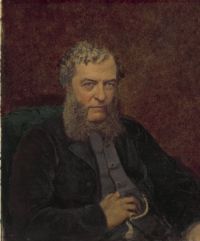
Portrait of John Lort Stokes John Lort Stokes Discoveries in Australia, Volume 2… (1846)

The hum of insects, and sudden disturbance of rich-coloured parrots, screaming and fluttering through the branches, and the strong, short, rapid flight of the dove, with its melancholy cooing, transported us in imagination a long way inland, whereas we were not three hundred yards from the beach. We now wended our way towards a small eminence, through long grass, in most places interwoven with creepers, compelling us to tear our way through them in the ascent.
Source: Wikisource

Portrait of John Lort Stokes John Lort Stokes Discoveries in Australia, Volume 2… (1846)

The inevitable consequence was to prevent an augmentation of the emigration fund, which inflicted a serious evil on the colony, though by many the high price was considered a great boon, as it enabled them to enjoy, at a trifling charge, immense back runs, as safe from the intrusion of interlopers as if they had been granted by the Crown in perpetuity. It is my impression that the attempt to raise the largest sum of money by the sale of the smallest number of allotments is unwise, as it operates as a discouragement to small capitalists, who wish to occupy the land for themselves
Source: Wikisource

Portrait of John Lort Stokes John Lort Stokes Discoveries in Australia, Volume 2… (1846)

But the chief cause of endless change is the variation, which has progressively increased at Sydney since the colony was first formed, so as to make a difference in the boundary of a grant of land of one square mile in ten.
I will suppose a case in order to illustrate my meaning. In the early days of the colony a piece of land is obtained by a person who merely performs the location duties, and does nothing to his estate until the present time, when he or his successor goes to occupy it.
Source: Wikisource

Get perspective with Kwize: daily news enlightened by great literature