Summary

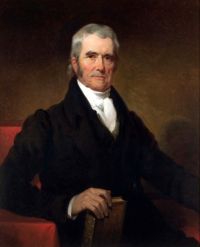
Portrait of John Marshall John Marshall Conn v. Penn — Opinion of the Court

They refuse to appear before the commissioners, and to exhibit either their equitable titles, or to show the payments they have made. On what pretence can such plaintiffs claim the aid of a Court of Equity? What is a Court to do in such a state of things? Where a party asking its aid refuses to comply with the conditions on which that aid must depend, a Court is certainly correct in refusing its aid, and may dismiss the bill. But in such a case, we think it would be harsh to make the decree of dismission a bar to a future action.
Source: Wikisource

Portrait of John Marshall John Marshall Conn v. Penn — Opinion of the Court

Without going into the merits of the case, the counsel for the plaintiffs contend, that the decree ought to be reversed, because it appears to have been pronounced in part on parol testimony, which has not been introduced into the record, and because the decree was made when the parties interested were not all before the Court.
The laws of the United States have always proceeded on the supposition, that in revising decrees in Chancery, the facts, as well as the law, should be laid before this Court.
Source: Wikisource

Get perspective with Kwize: daily news enlightened by great literature