Summary

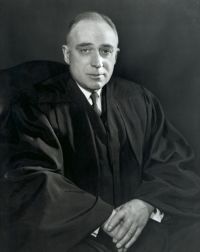
Portrait of John Marshall Harlan II John Marshall Harlan II Lynch v. Overholser — Opinion of the Court

But the fact that the accused has pleaded guilty or that, overcoming some defense other than insanity, the Government has established that he committed a criminal act constitutes only strong evidence that his continued liberty could imperil 'the preservation of public peace.' It no more rationally justifies his indeterminate commitment to a mental institution on a bare reasonable doubt as to past sanity than would any other cogent proof of possible jeopardy to 'the rights of persons and of property' in any civil commitment.
Source: Wikisource

Portrait of John Marshall Harlan II John Marshall Harlan II Lynch v. Overholser — Opinion of the Court

To construe § 24-301 (d) as requiring a court, without further proceedings, automatically to commit a defendant who, as in the present case, has competently and advisedly not tendered a defense of insanity to the crime charged and has not been found incompetent at the time of commitment is out of harmony with the awareness that Congress has otherwise shown for safeguarding those suspected of mental incapacity against improvident confinement.
Source: Wikisource

Portrait of John Marshall Harlan II John Marshall Harlan II Lynch v. Overholser — Opinion of the Court

Where accused has pleaded insanity as a defense to a crime, and the jury has found that the defendant was, in fact, insane at the time the crime was committed, it is just and reasonable in the Committee's opinion that the insanity, once established, should be presumed to continue and that the accused should automatically be confined for treatment until it can be shown that he has recovered.' S.Rep.
Source: Wikisource

Get perspective with Kwize: daily news enlightened by great literature