Summary

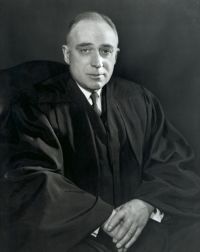
Portrait of John Marshall Harlan II John Marshall Harlan II Simmons v. United States (390 U.S. 377…

Thus, in this case Garrett was obliged either to give up what he believed, with advice of counsel, to be a valid Fourth Amendment claim or, in legal effect, to waive his Fifth Amendment privilege against self-incrimination. In these circumstances, we find it intolerable that one constitutional right should have to be surrendered in order to assert another. We therefore hold that when a defendant testifies in support of a motion to suppress evidence on Fourth Amendment grounds, his testimony may not thereafter be admitted against him at trial on the issue of guilt unless he makes no objection.
Source: Wikisource

Portrait of John Marshall Harlan II John Marshall Harlan II Simmons v. United States (390 U.S. 377…

The rule adopted by the courts below does not merely impose upon a defendant a condition which may deter him from asserting a Fourth Amendment objection-it imposes a condition of a kind to which this Court has always been peculiarly sensitive. For a defendant who wishes to establish standing must do so at the risk that the words which he utters may later be used to incriminate him. Those courts which have allowed the admission of testimony given to establish standing have reasoned that there is no violation of the Fifth Amendment's Self-Incrimination Clause because the testimony was voluntary.
Source: Wikisource

Get perspective with Kwize: daily news enlightened by great literature