Summary

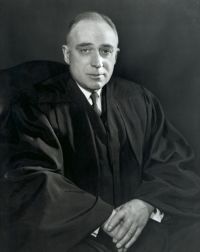
Portrait of John Marshall Harlan II John Marshall Harlan II United States v. Storer Broadcasting Company…

So clear is it, in fact, that Storer has not been 'aggrieved' by the mere issuance of the regulations, that the Court's grant of review in this case must be premised not upon the effect of the regulations themselves, but simply upon Storer's interest in knowing whether or not a future application of them would be valid. The result is that the statutory procedure for obtaining relief from a present injury caused by an order has been converted into something quite different-namely, a procedure for obtaining a declaratory judgment as to the validity of a future application of new regulations.
Source: Wikisource

Portrait of John Marshall Harlan II John Marshall Harlan II United States v. Storer Broadcasting Company…

But plans for expansion of communications facilities have always had to be made subject to the contingency that the Commission might refuse to grant the necessary license for any one of a number of reasons. Storer's position in this respect is now no different than it was before the regulations were issued: any plan to acquire a new station must simply take into account, among the several contingencies, the likelihood that a denial of a license under the regulations would be upheld on appeal.
Source: Wikisource

Portrait of John Marshall Harlan II John Marshall Harlan II United States v. Storer Broadcasting Company…

In the second place, even if § 1034 is to be construed as authorizing declaratory relief, I see no reason why the usual requirements for invoking equity jurisdiction should not be as applicable to such a proceeding as they are to an ordinary declaratory judgment action or to a proceeding to set aside a Commission order under the Urgent Deficiencies Act, the predecessor to § 1034 under which the CBS case arose.
Source: Wikisource

Get perspective with Kwize: daily news enlightened by great literature