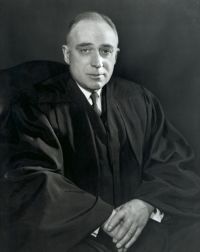
John Marshall Harlan II

John Marshall Harlan II

Summary

Portrait of John Marshall Harlan II John Marshall Harlan II Williams v. Rhodes — Concurrence

Of course, the State may limit the right of political association by invoking an impelling policy justification for doing so. But as my Brother BLACK'S opinion demonstrates, Ohio has been able to advance no such justification for denying almost half a million of its citizens their fundamental right to organize effectively for political purposes. Consequently, it may not exclude them from the process by which Presidential Electors are selected.
Source: Wikisource

Portrait of John Marshall Harlan II John Marshall Harlan II Williams v. Rhodes — Concurrence

I agree that the American Independent Party is entitled to have the names of its Presidential and Vice Presidential candidates placed on the Ohio ballot in the forthcoming election, but that, for the practical reasons stated by the Court, the Socialist Labor Party is not. However, I would rest this decision entirely on the proposition that Ohio's statutory scheme violates the basic right of political association assured by the First Amendment which is protected against state infringement under the Due Process Clause of the Fourteenth Amendment.
Source: Wikisource

Portrait of John Marshall Harlan II John Marshall Harlan II Williams v. Rhodes — Concurrence

Consequently, there is no obstacle to a holding which denies the States, absent an overriding state interest, the right to prevent third parties from having an opportunity to put their candidates before the attention of the voters or whatever other body the State has designated as the one which is to choose Electors.
A word should be added about the constitutional status of Ohio's requirement that a third party, to qualify for ballot position, must collect the signatures of eligible voters in a number equal to 15% of those voting at the last gubernatorial election.
Source: Wikisource

Get perspective with Kwize: daily news enlightened by great literature