Summary

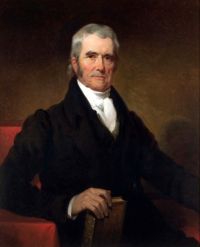
Portrait of John Marshall John Marshall Henry v. Ball — Opinion of the Court

The expressions of that part of the first section which prohibits the importation of slaves, are restricted to cases of importation 'for sale or to reside in this state.' The petitioner was obviously not imported for sale, nor is the court of opinion that the short time for which she was to continue with Mrs. Rankin can satisfy the words, 'to reside within this state.' The legislature must have intended to prohibit a general residence, not a special limited residence, where the slave is to remain for that portion of the year for which she was hired that still remained.
Source: Wikisource

Portrait of John Marshall John Marshall Henry v. Ball — Opinion of the Court

The plaintiff being a child, and the slave of the defendant, who resided in Virginia, was, some short time before the month of May, 1810, put to live with Mrs. Rankin, then residing also in Virginia, whose husband was an officer in the marine corps, stationed in the city of Washington. Mrs. R. was to keep the girl for a year, and was to give her victuals and clothes for her services. Some time in May, 1810, Mrs. R. removed to Washington, and brought the petitioner with her, whether with or without the permission of Mr. Ball, is entirely uncertain.
Source: Wikisource

Get perspective with Kwize: daily news enlightened by great literature