Summary

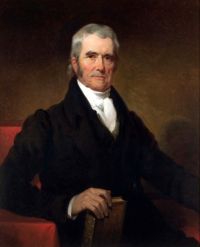
Portrait of John Marshall John Marshall Royal Naval Biography — Tucker… (1823)

Captain Beaver was an eye-witness to the movements of the Cherub and Julia ; and he afterwards told Captain Tucker that the promptitude with which he had extricated them from their perilous situation was deserving of the highest praise; that as much credit was due to him as if he had brought out the frigates, and that he would duly report his conduct. All who are acquainted with the anchorage at Basse Terre, must be aware of the difficulty of an enemy getting into that roadstead, as the high land commanding it occasions constant baffling winds and calms.
Source: Wikisource

Portrait of John Marshall John Marshall Royal Naval Biography — Tucker… (1823)

When that time arrived, not a man appeared in the galley to claim the meat for his mess, nor was a single piece of it taken away even after it had been surveyed and reported “wholesome food, fit for men to eat.” The first Lieutenant was then desired by Captain Tucker to allow it to remain in the cook’s charge until the usual hour for mustering at quarters, and then to throw whatever remained unclaimed overboard. On the 2d, 3d, and 4th days, the meat was cooked as before, but still no demand was made for it by any of the messes, the ship’s company preferring to dine on biscuit and grog alone.
Source: Wikisource

Portrait of John Marshall John Marshall Royal Naval Biography — Tucker… (1823)

At the end of Sept. 1812, the Cherub returned to England with ninety-six sail of merchantmen under her protection. Captain Tucker was immediately ordered to refit her for foreign service; and in a little more than two months he sailed for the South American station. During the time that his ship was in dock, at Portsmouth, her crew were allowed a month’s leave of absence to see their friends; and although they were aware that she was again going abroad, not a man was absent from his duty at the time of her departure.
Source: Wikisource

Get perspective with Kwize: daily news enlightened by great literature