Summary

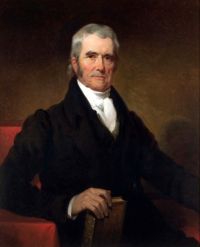
Portrait of John Marshall John Marshall Spring v. Gray — Opinion of the Court

It is no more 'an account,' and no more connected with 'the trade of merchandise,' than a bill of exchange or a contract for the rent of a house, or the hire of a carriage, or any other single transaction which might take place between individuals who happened to be merchants. An entry of it on the books of either could not change its nature, and convert it from an insulated transaction between individuals, into an account concerning the trade of merchandise, between merchant and merchant.
Source: Wikisource

Portrait of John Marshall John Marshall Spring v. Gray — Opinion of the Court

He added, 'whether the statute is at all applicable to a case of mutual dealing and mutual credits between merchant and merchant, is a question not now necessary to be decided, because the present is not a case of that kind. On the part of the respondents, this is no account at all. This is a case of an account merely on the part of the appellants; there is no selling or trading. It is a case of a joint purchase of goods, where one of the purchasers takes the whole goods, and is to account for one-third of the proceeds.
Source: Wikisource

Portrait of John Marshall John Marshall Spring v. Gray — Opinion of the Court

The contract was made with the partnership, and they appointed one of themselves to see it executed. In doing this, the person appointed acts under the agreement, and the advantages which accrue to him, accrue to the plaintiffs. It was, without doubt, one of the inducements to the contract, that a partner of the firm should execute it. Courts look at the substance of agreements, not to the mere form. The bill of lading must necessarily have been signed by the master of the Morning Star. It would have been so signed, if they had appointed any other person to execute the agreement.
Source: Wikisource

Get perspective with Kwize: daily news enlightened by great literature