Summary

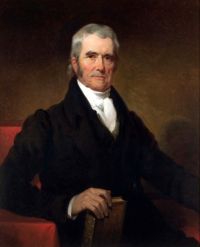
Portrait of John Marshall John Marshall Yeaton v. Lynn — Opinion of the Court

It is unnecessary to decide this point, because we are all of opinion that, as the issue tried by the jury was on the plea of non assumpsit; as the plaintiff was incontestably executor when this suit was brought and when that issue was joined, and could rightfully maintain this action; as the revocation of the executorship was not brought before the court by a plea since the last continuance, as it might have been; the defendant is to be considered as waving the defence, and resting his cause on the general issue.
Source: Wikisource

Portrait of John Marshall John Marshall Yeaton v. Lynn — Opinion of the Court

But if this averment be omitted, and the defendant pleads in bar, he admits the ability of the plaintiff to sue, and the judgment is not void. 5 Com. Dig. title Plead. 2 D. 10, 267. The inference that he could not be permitted to give this fact in evidence is very strong.
A distinction seems to be taken between an action brought by a person who has no right to sue, and an action brought by a person capable of suing at the time, but who becomes incapable while it is depending. In the first case the plaintiff may be non suited at the trial; in the last the disability must be pleaded.
Source: Wikisource

Portrait of John Marshall John Marshall Yeaton v. Lynn — Opinion of the Court

The judgment which was obtained by Robert Young, against John Wise, in his life time and William Yeaton, the defendant, is stated in the case agreed to have been for the proper debt of the defendant, for which John Wise was surety. This debt has never been paid by the defendant, and was not paid by John Wise in his life time.
After this judgment William Yeaton became insolvent; and John Wise sold his real estate in Alexandria, and invested the proceeds in bank stock, in the name of Adam Lynn, the plaintiff
Source: Wikisource

Get perspective with Kwize: daily news enlightened by great literature