Summary

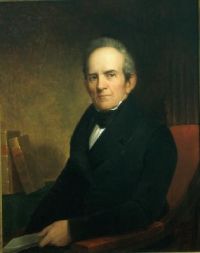
Portrait of Smith Thompson Smith Thompson United States v. Linn (42 U.S. 104…

Heermance, 1 Johns. 92, the court say there is no rule in pleading, better or more universally established, than, that whenever new matter is introduced the pleading must conclude with an averment. And the reason, say the court, is obvious, because the plaintiff might otherwise be precluded from setting forth matter which would maintain his action, although the matter pleaded by the defendant might be true.
Source: Wikisource

Portrait of Smith Thompson Smith Thompson United States v. Linn (42 U.S. 104…

If this mode of pleading be adopted, the special matter set up must, as in a special plea, be such, that if true in point of fact, it will bar the action and defeat the plaintiff's right to recover. The matter set up in this plea, when stripped of some circumlocution, is, that after he, Joseph Duncan, and the other parties to the instruments, had signed the same, it was, without his consent, direction, or authority, altered by affixing seals to their signatures.
Source: Wikisource

Portrait of Smith Thompson Smith Thompson United States v. Linn (42 U.S. 104…

It is laid down by Chitty in his Treatise on Pleading, that a plea which is bad in part is bad in toto. If therefore two defendants join in a plea, which is sufficient for one but not for the other, the plea is bad as to both. For the court cannot sever it, and say that one is guilty, and that the other is not, when they put themselves on the same terms. Chitty, 598. A plaintiff may in an action in form ex delicto against several defendants, enter a nolle prosequi as to one of them.
Source: Wikisource

Get perspective with Kwize: daily news enlightened by great literature