Summary

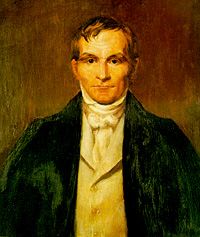
Portrait of Philip Pendleton Barbour Philip Pendleton Barbour Zacharie v. Franklin — Opinion of the Court

The second exception taken by the defendant was, to the admission in evidence on the part of the plaintiff, of an instrument of writing, bearing date July the 11th, 1805, in the state of South Carolina; purporting to have been executed by Joseph Milah, as a gift or donation of two slaves, and certain goods and household furniture, to one Sarah M'Guire. The court, however, admitted the evidence, and as we think, properly, for the reason assigned in the bill of exceptions.
Source: Wikisource

Portrait of Philip Pendleton Barbour Philip Pendleton Barbour Zacharie v. Franklin — Opinion of the Court

If this question were necessarily to be decided by the principles of law, as settled in the courts of England and the United States, there would be no doubt of the truth of the legal proposition, that making a mark is signing, even in the attestation of a last will and testament; which has been fenced around by the law with more than ordinary guards, because they are generally made by parties, when they are sick, and when too they are frequently inopes consilii, and when they therefore need all the protection which the law can afford to them.
Source: Wikisource

Get perspective with Kwize: daily news enlightened by great literature