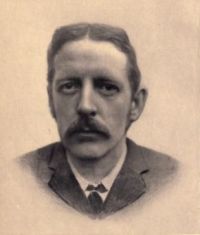
John Miller Gray

John Miller Gray

Summary

Portrait of John Miller Gray John Miller Gray 1911 Encyclopædia Britannica (1911)

Apart from his skill as a painter Wilkie was an admirable etcher. The best of his plates, such as the “Gentleman at his Desk” (Laing, VII.) , the “Pope examining a Censer” (Laing, VIII.) , and the “Seat of Hands” (Laing, IV.) , are worthy to rank with the work of the greatest figure-etchers. During his lifetime he issued a portfolio of seven plates, and in 1875 Dr David Laing catalogued and published the complete series of his etchings and dry-points, supplying the place of a few copper-plates that had been lost by reproductions, in his Etchings of David Wilkie and Andrew Geddes.
Source: Wikisource

Portrait of John Miller Gray John Miller Gray 1911 Encyclopædia Britannica (1911)

One of his first patrons in London was Stodart, a pianoforte maker, a distant connexion of the Wilkie family, who commissioned his portrait and other works and introduced the young artist to the dowager-countess of Mansfield. This lady’s son was the purchaser of the “Village Politicians,” which attracted great attention when it was exhibited in the Royal Academy of 1806, where it was followed in the succeeding year by the “Blind Fiddler,” a commission from the painter’s lifelong friend Sir George Beaumont.
Source: Wikisource

Portrait of John Miller Gray John Miller Gray 1911 Encyclopædia Britannica (1911)

Wilkie was indeed greatest as a genre-painter. But on technical grounds his change of style was criticized with undue severity. While his later works are admittedly more frequently faulty in form and draughtsmanship than those of his earlier period, some of them at least (the “Bride’s Toilet,” 1837, for instance) show a true gain and development in power of handling, and in mastery over complex and forcible colour harmonies.
Source: Wikisource

Get perspective with Kwize: daily news enlightened by great literature