Summary

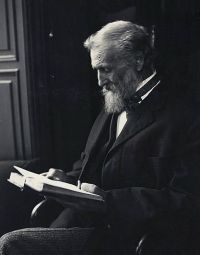
Portrait of John Muir John Muir The Yosemite — Snow Banners (1912)

Instead of at once finding rest like that which falls into the tranquil depths of the forest, it is shoved and rolled and beaten against boulders and out-jutting rocks, swirled in pits and hollows like sand in river pot-holes, and ground into sparkling dust. And when storm winds find this snow-dust in a loose condition on the slopes above the timber-line they toss it flack into the sky and sweep it onward from peak to peak in the form of smooth regular banners, or in cloudy drifts, according to the velocity and direction of the wind, and the conformation of the slopes over which it is driven.
Source: Wikisource

Portrait of John Muir John Muir The Yosemite — Snow Banners (1912)

But it is on the mountain tops, when they are laden with loose, dry snow and swept by a gale from the north, that the most magnificent storm scenery is displayed. The peaks along the axis of the Range are then decorated with resplendent banners, some of them more than a mile long, shining, streaming, waving with solemn exuberant enthusiasm as if celebrating some surpassingly glorious event.
Source: Wikisource

Portrait of John Muir John Muir The Yosemite — Snow Banners (1912)

You will then find your feet playing a tune, and quickly discover the music and poetry of these magnificent rock piles — a fine lesson; and all Nature’s wildness tells the same story — the shocks and outbursts of earthquakes, volcanoes, geysers, roaring, thundering waves and floods, the silent uprush of sap in plants, storms of every sort — each and all are the orderly beauty-making love-beats of Nature’s heart.
Source: Wikisource

Get perspective with Kwize: daily news enlightened by great literature