Summary

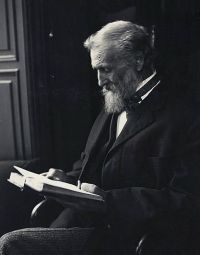
Portrait of John Muir John Muir The Yosemite — The Trees of the Valley (1912)

Ascending from the lowest branch to the topmost is like stepping up stairs through a blaze of white light, every needle thrilling and shining as if with religious ecstasy.
Unfortunately there are but few sugar pines in the Valley, though in the King’s yosemite they are in glorious abundance. The incense cedar (Libocedrus decurrens) with cinnamon-colored bark and yellow-green foliage is one of the most interesting of the Yosemite trees. Some of them are 150 feet high, from six to ten feet in diameter, and they are never out of sight as you saunter among the yellow pines.
Source: Wikisource

Portrait of John Muir John Muir The Yosemite — The Trees of the Valley (1912)

The most influential of the Valley trees is the yellow pine (Pinus ponderosa) . It attains its noblest dimensions on beds of water-washed, coarsely-stratified moraine material, between the talus slopes and meadows, dry on the surface, well-watered below and where not too closely assembled in groves the branches reach nearly to the ground, forming grand spires 200 to 220 feet in height. The largest that I have measured is standing alone almost opposite the Sentinel Rock, or a little to the westward of it. It is a little over eight feet in diameter and about 220 feet high.
Source: Wikisource

Get perspective with Kwize: daily news enlightened by great literature