Summary

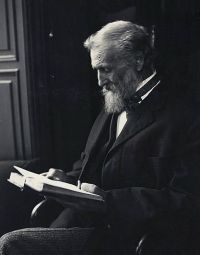
Portrait of John Muir John Muir The Yosemite — The Big Trees (1912)

One soon becomes acquainted with new species of pine and fir and spruce as with friendly people, shaking their outstretched branches like shaking hands and fondling their little ones, while the venerable aboriginal sequoia, ancient of other days, keeps you at a distance, looking as strange in aspect and behavior among its neighbor trees as would the mastodon among the homely bears and deers.
Source: Wikisource

Portrait of John Muir John Muir The Yosemite — The Big Trees (1912)

Only when it is young does it show like other conifers a heavenward yearning, sharply aspiring with a long quick- growing top. Indeed, the whole tree for the first century or two, or until it is a hundred or one hundred and fifty feet high, is arrowhead in form, and, compared with the solemn rigidity of age, seems as sensitive to the wind as a squirrel’s tail.
Source: Wikisource

Portrait of John Muir John Muir The Yosemite — The Big Trees (1912)

As soon as any accident happens to the crown, such as being smashed off by lightning, the branches beneath the wound, no matter how situated, seem to be excited, like a colony of bees that have lost their queen, and become anxious to repair the damage. Limbs that have grown outward for centuries at right angles to the trunk begin to turn upward to assist in making a new crown, each speedily assuming the special form of true summits.
Source: Wikisource

Get perspective with Kwize: daily news enlightened by great literature