“ There is a yellowish haze in the east, white in the west, mild and mellow as a Wisconsin Indian Summer, but finer, more ethereal, God’s holy light making all divine. In an hour or so I came to the confluence of the first of the seven grand tributaries of the main Muir Glacier and had a glorious view of it as it comes sweeping down in wild cascades from its magnificent, pure white, mountain-girt basin to join the main crystal sea, its many fountain peaks, clustered and crowded, all pouring forth their tribute to swell its grand current. ”
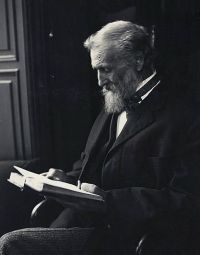
John Muir
Summary
John Muir’s Travels in Alaska, written in the late 19th century, is a vivid account of the author’s journey through the region’s unspoiled wilderness, highlighting its glacial grandeur and ecological complexity. Through careful observations, Muir records the splendor of icebergs, fiords, and moraines, along with the endurance of spruce forests and salmon streams, while engaging with Indigenous communities such as the Toyatte and Kadachan.
His poetic writing conveys both the stark beauty of landscapes like Wrangell and the powerful forces of glaciers, depicting nature as a tribute to creation’s lasting strength. The work combines Muir’s deep respect for Alaska’s untouched environment, portraying it as a place where geological activity and life exist in deep harmony.
Quotes from Travels in Alaska (John Muir)
“ The big Stickeen Glacier is hardly out of sight ere you come upon another that pours a majestic crystal flood through the evergreens, while almost every hollow and tributary cañon contains a smaller one, the size, of course, varying with the extent of the area drained. Some are like mere snow-banks; others, with the blue ice apparent, depend in massive bulging curves and swells, and graduate into the river-like forms that maze through the lower forested regions and are so striking and beautiful that they are admired even by the passing miners with gold-dust in their eyes. ”
“ Brown metamorphic slate, close-grained in places, dips away from the inlet, presenting edges to ice-action, which has given rise to a singularly beautiful and striking surface, polished and grooved and fluted. All the next day it rained. The mountains were smothered in dull-colored mist and fog, the great glacier looming through the gloomy gray fog fringes with wonderful effect. The thunder of bergs booms and rumbles through the foggy atmosphere. It is bad weather for exploring but delightful nevertheless, making all the strange, mysterious region yet stranger and more mysterious. ”
