Summary

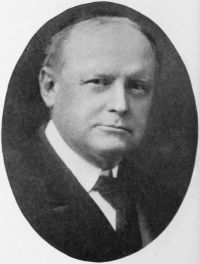
Portrait of John Punnett Peters John Punnett Peters 1911 Encyclopædia Britannica, Volume 3… (1911)

A settled population is found only along the river banks. Except the capital, Basra, there are no towns of importance. Korna, at the junction of the two great rivers; Amara on the Tigris; Shatra on the Shatt el-Haï canal, connecting the Tigris and Euphrates; Nasrieh, at the junction of that canal with the Euphrates and Suk esh-Sheiukh, on the lower reaches of the Euphrates, are the principal settlements, with a population varying from 3000 to 10,000 or somewhat less.
Source: Wikisource

Portrait of John Punnett Peters John Punnett Peters 1911 Encyclopædia Britannica, Volume 3… (1911)

The whole region is subject to inundations. The town itself is unhealthy and strangers especially are apt to be attacked by fever. Basra is the port of Bagdad, with which it has steam communication by an English line of river steamers weekly and also by a Turkish line. The Shatt el-Arab is deep and broad, easily navigable for ocean steamers, and there is weekly communication by passenger steamer with India, while two or more freight lines, which also take passengers, connect Basra directly with the Mediterranean, and with European and British ports.
Source: Wikisource

Portrait of John Punnett Peters John Punnett Peters 1911 Encyclopædia Britannica, Volume 3… (1911)

The present city was conquered by the Turks in 1668, and since that period has been the scene of many revolutions. It was taken in 1777 after a siege of eight months by the Persians under Sadik Khan. In about a year it fell again into the hands of the Turks, who were again deprived of it by the sheikh of the Montefik (Montafiq) Arabs. The town was in the October following recovered by Suleiman Pasha, who encountered the sheikh on the banks of the Euphrates and put him to flight; it has since remained in the hands of the Turks.
Source: Wikisource

Get perspective with Kwize: daily news enlightened by great literature